


The Art4Change Fellowship: young storytellers bring their ideas to life
The Art4Change Storytelling Fellowship offers thirty young creatives from across Africa, Europe and the diaspora guidance to tell the stories that reflect their realities, whether personal, local or global. The next phase of the journey now begins as fellows move from training into producing their own projects.
The Fellowship, coordinated by AEIP partner The Youth Café, kicked off on 17 June 2026 as part of the AEIP’s commitment to amplifying the voices of young people across the innovation landscape. Since then, fellows have learned about the essentials of storytelling and developed production-ready content plans. It is now up to them to put these lessons into practice and bring their ideas to life.
For the AEIP, youth-led storytelling provides a practical way of bringing lived experiences and youth perspectives into conversations about innovation. By documenting challenges, ideas and solutions from their own communities, fellows can shine a light on the voices and experiences that are too often overlooked.
Many fellows have described the experience as transformative. Trizah Weche Ehachi (Nairobi, Kenya) credits the fellowship with giving her “the mentorship, tools and creative space” to turn her mini-documentary, Generation Next, into a reality.
For Josias Masamba (Goma, DRC), who is documenting resilience among young creatives in Goma, the training helped him to “pinpoint the problem” within his community and reframe it through a lens of hope rather than conflict.
Diverse backgrounds, diverse ideas
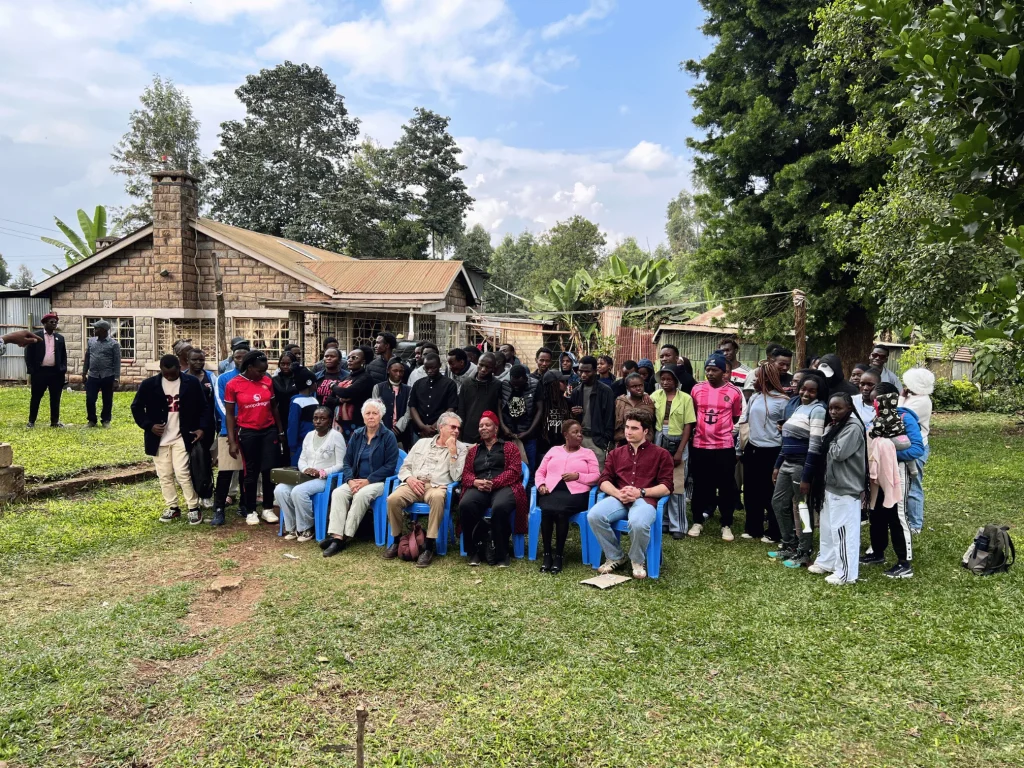
To broaden the Fellowship’s reach and diversity of perspectives, The Youth Café built on its collaboration with the Maji Mazuri Filmmaking Programme. The programme, which empowers marginalised youth and children through community-led media, shares many of the Art4Change Fellowship’s goals and values. As the Filmmaking Programme reached its conclusion, several participants were invited to continue their storytelling journeys through the AEIP Art4Change Fellowship, bringing new experiences and perspectives into the cohort.
Four lessons for a good story
The weekly sessions equipped participants with practical lessons that will guide their upcoming fieldwork. Cidney Njeri (The Youth Café) summarises the key takeaways:
- Structure over spontaneity – a compelling story needs a clear beginning, middle and end. Fellows learned to apply the 5-Question Framework: What is the story? Why does it matter? Who is the audience? How will it be told? What impact should it create?
- The audience shapes the medium – the same story, covering the same issues, can be told very differently depending on the specific target audience. Understanding who a story is intended for can influence everything from its format and tone to the platform on which it is shared.
- Impact matters more than reach – a message that reaches a small audience of target stakeholders and inspires meaningful action outperforms one with high views but little effect.
- Diverse lenses enrich the work – cross-border exchange between the fellows highlighted how different storytelling traditions bring out complementary strengths. Together, these perspectives contribute to a stronger shared narrative.
The next chapter
With the training phase now complete, the focus shifts from learning to creating. Over the coming months, fellows will begin producing their projects, whether through photography, article writing or video production.
Their work will culminate in an online showcase and closing ceremony in December, celebrating both their stories and the journey that brought them to life. Afterwards, selected stories will be featured on the AEIP website.
Those eager to discover the fellows’ work firsthand will have an early opportunity at the upcoming Africa-Europe Innovation Dialogues 2026. Fellows will present their projects ahead of the online showcase in December, offering audiences a first look at the stories they have been developing. Topics range from turning discarded fabric scraps into fashion to community-led climate action initiatives.